


Vitamin B12: Why Low Levels Can Affect Your Energy, Mood & Brain
- Jan Clementson
- Jun 2
- 5 min read
Vitamin B12 is a small nutrient with a big impact. It helps your body produce energy, keep your nerves healthy, and support brain function.
When levels drop — even slightly — you might start to feel “off” without knowing why. Common symptoms like tiredness, brain fog, or tingling can appear gradually and often get mistaken for stress or lifestyle factors.
Feeling tired all the time? Here’s why B12 matters
Vitamin B12 helps your body make red blood cells, which carry oxygen around your system. When levels are low, your body may not get enough oxygen efficiently — which can leave you feeling drained.
However, research shows that B12 is not a general energy booster in people who already have normal levels. A large systematic review of clinical trials found that supplementing B12 did not significantly improve fatigue or energy in people without a deficiency:
This is why identifying a true deficiency is so important — it’s about correcting a problem, not boosting normal levels.
Brain fog, forgetfulness & low focus
If you’ve been struggling with concentration, memory, or mental clarity, low B12 could be one possible factor.
That said, research suggests that improvements in brain function mainly happen when someone is actually deficient. The same review above found no clear benefit in cognitive performance for people with normal B12 levels.
If you’re dealing with ongoing brain fog, it’s worth exploring other causes too — including sleep, stress, iron levels, and thyroid function.
Tingling or “pins and needles” sensations
Vitamin B12 plays a key role in keeping your nerves healthy and protected. When levels drop, nerve signals can become disrupted.
This may lead to symptoms like:
Tingling in hands or feet
Numbness
“Pins and needles” sensations
These symptoms are more strongly linked to true deficiency and should be checked early, as nerve-related issues can take longer to recover if left untreated.
Why vitamin B12 deficiency is often missed
One of the challenges with B12 is that symptoms develop slowly and are easy to overlook.
Many people:
Feel generally tired or “run down”
Assume it’s stress or ageing
Get normal or borderline blood results
Don’t realise symptoms may still be linked to low B12
Because of this, doctors often recommend broader testing rather than relying on a single marker.
Who is more likely to have low B12?
You may be at higher risk if you:
Follow a vegan or vegetarian diet
Are over 50
Take long-term acid-reducing medication, such as Omeprazole
Have digestive or absorption issues
In these cases, diet alone may not always be enough to maintain healthy levels.
Can vitamin B12 help improve symptoms?
If you are genuinely low in B12, treatment can make a noticeable difference in energy, mood, and nerve symptoms.
But it’s important to understand that B12 works best as a corrective treatment, not a general wellness supplement.
Research shows benefits mainly occur in people with confirmed deficiency — not as a boost for already-normal/
When should you consider testing?
If you’re experiencing ongoing symptoms like:
Fatigue that won’t improve
Brain fog or poor concentration
Tingling or numbness
Low mood or irritability
…it may be worth considering a vitamin B12 blood test.
Sometimes a broader nutrient deficiency panel is helpful to check for other possible causes at the same time.
How to improve vitamin B12 levels naturally (foods & supplements)
If your vitamin B12 levels are low or borderline, the good news is that they can usually be improved quite effectively through diet and supplementation.
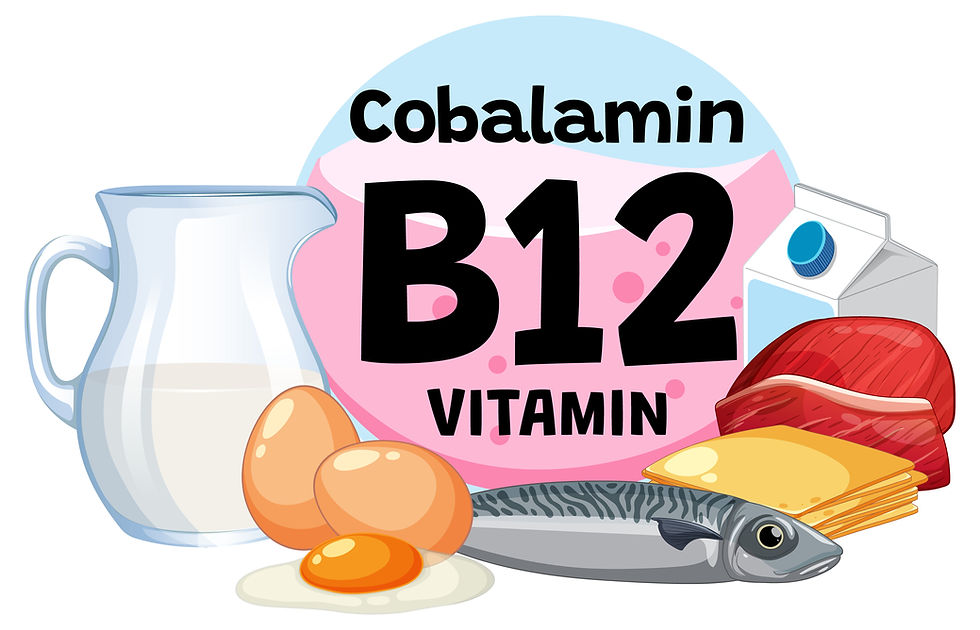
B12 is found naturally in animal-based foods, including meat, fish, eggs, and dairy products. Good sources include beef, salmon, tuna, chicken, milk, cheese, and yoghurt. For people who eat these foods regularly, mild deficiencies can sometimes be corrected by improving intake alone.
However, for people who follow a vegan or vegetarian diet, food sources are often not enough on their own. In these cases, B12-fortified foods (such as plant-based milks, breakfast cereals, and nutritional yeast), algae products and supplements are usually necessary to maintain healthy levels.
Supplements come in different forms, including tablets, sprays, and lozenges. In cases of confirmed deficiency or absorption issues, healthcare professionals may recommend higher-dose oral supplements or vitamin B12 injections, which bypass the digestive system and restore levels more quickly.
The right approach depends on your symptoms, diet, and test results — which is why testing is often the best first step before starting supplementation.
Considering Vitamin B12 Supplementation?
If your vitamin B12 levels are low, supplementation is often the most effective way to restore them. A commonly recommended option is a sublingual vitamin B12 supplement (1,000 mcg), such as the Cytoplan product below.

This form is designed to dissolve under the tongue, allowing absorption directly through the mucous membranes in the mouth, which helps bypass some of the challenges of digestion.
This can be particularly useful because vitamin B12 normally relies on a protein called intrinsic factor in the stomach to be properly absorbed. When digestive function is compromised — for example due to low stomach acid, gut inflammation, or age-related changes — this absorption process may not work efficiently.
Sublingual delivery therefore offers a practical alternative to support better uptake in people who may struggle to absorb B12 through the gut.
Order your Cytoplan Vitamin B12 supplement here. Use code CYT 248875-35-10 to receive 35% off.
The Takeaway
Vitamin B12 is essential for energy, brain function, and nerve health — but more is not always better.
What matters most is having the right level for your body. Too low can cause symptoms, but taking it when you don’t need it may not make a difference.
If symptoms are ongoing, testing is the best way to understand what’s really going on.
Ready to Take the Next Step?
If you’re struggling with ongoing fatigue, brain fog, low mood, or other symptoms that just don’t seem to have a clear cause, it may be worth looking deeper. Sometimes, nutrients like vitamin B12 are only part of the picture — and uncovering the full story can make all the difference.
Start Here
Book a free 30-minute Discovery Call
We’ll explore your symptoms, discuss what you’ve already tried, and indentify where hidden triggers may be contributing to how you’re feeling.
Not ready for a call yet?
That’s completely fine.
You can still take a positive step forward by joining my Nutrition & Lifestyle Insider, where you’ll receive exclusive insights, practical tips, and the latest updates on gut health, brain clarity, and energy optimisation — all designed to help you feel your best day-to-day.


Comments